Marginalised Group, Labour and Employment
Labour and Employment
Employment and labour markets constitute a long-standing research focus of the Council for Social Development (CSD), with emphasis on workers’ rights, decent work, social protection, and labour institutions. CSD’s research supports policy design through analysis based on NSSO surveys, Census data, Agricultural Census, and primary fieldwork. Studies span agricultural, informal, and plantation labour, employment generation programmes, self-employment schemes, and labour market institutions, with early work dating back to the 1970s. Research on MGNREGA examines regional impacts, leakages, and asset creation, while migration studies analyse labour mobility and segmentation. Other work addresses women’s and child labour, informal economy dynamics, and barriers faced by Dalits and Adivasis in labour and entrepreneurship. Supported by national institutions and ministries, CSD’s research contributes to evidence-based labour policy and social justice.
Marginalised Section
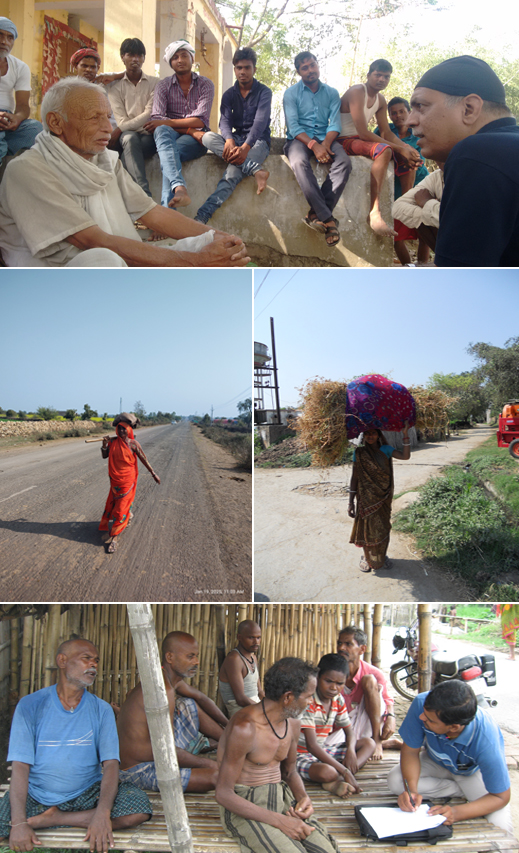
Dalits and Adivasis are among India’s most vulnerable social groups, facing persistent economic, social, and institutional deprivation. The Council for Social Development (CSD) has conducted extensive research on poverty, land dispossession, barriers to formal credit, livelihood promotion, and the effectiveness of tribal development programmes. Studies also examine political and legal empowerment, self-governance, indigenous institutions, and discrimination faced by Dalit entrepreneurs under government schemes. While some research is pan-India, much focuses on tribal-dominated states such as Bihar, Jharkhand, and Rajasthan. Combining large-scale secondary data with intensive fieldwork, often through commissioned studies, CSD disseminates findings via publications and academic forums, supporting evidence-based policies to address structural inequalities and promote inclusive development.
PROJECTS
Contextualizing the role of caste and gender in defining employment and earning outcomes in the Gig Economy
PI: Dr Akhil Alha
Associated Academic Staff: Ms Nancy Yadav (for 6 Months)
Funding Agency/s OR Institution/s: ICSSR
Time Period: 29 December 2024 to 28 December 2026
Brief Description
India’s gig economy is expanding rapidly, often celebrated for job creation amid jobless growth. However, this study questions whether caste and gender—central to exclusion in India’s labour market—continue to shape outcomes in the gig economy. Does platform-based, algorithm-driven work diminish identity-based discrimination, or replicate it in new forms?
Methodology
The study focuses on geographically tethered gig workers across four cities—Delhi-NCR, Jaipur, Bangalore, and Hyderabad—covering workers engaged with platforms like Uber, Zomato, and Urban Company. A total of 400 interviews will be conducted, split between Dalit and non-Dalit workers, and including 100 women. Sampling will draw from platform databases and snowball techniques, where needed. The study uses a mixed-method approach combining surveys and qualitative interviews.
Preliminary Findings
Preliminary literature and media reports suggest caste and gender may still shape access to work, client behavior, and earnings in the gig economy. For Dalits and women, algorithmic work may offer flexibility but not full emancipation. Social hierarchies may persist under new technological wraps.
Tentative Contributions
The study addresses a critical research gap by foregrounding caste and gender in gig economy debates. It aims to produce policy-relevant insights for inclusive labour reforms and social protection, especially as the gig sector expands under new labour codes.
Evaluation of the Centrally Sponsored Scheme for the Effective Implementation of the PCR Act and the PoA Act, and working of national helpline against attrocities (NHAA)
PI: Dr Akhil Alha
Co PI: Dr Susmita Mitra, Dr Sourindra Mohan Ghosh
Associated Academic Staff: Mr Gitesh Sinha, Ms Anuradha Singh
Funding Agency/s OR Institution/s: Ministry of Social Justice & Empowerment, Govt. of India
Time Period: May 2024 to February 2025
Brief Description
This study assesses the implementation and institutional effectiveness of the Scheduled Castes and the Scheduled Tribes (Prevention of Atrocities) Act, 1989 (PoA Act), and the Protection of Civil Rights Act, 1955. It evaluates whether the post-2015 amendments have meaningfully improved justice delivery, protection, and redressal for Dalit and Adivasi communities.
Using a multi-method approach—field surveys, NCRB data, and interviews—the study examines five areas: (a) victim compensation, (b) police functioning, (c) judicial performance, (d) institutional bodies such as Protection Cells and SC/ST police stations, and (e) schemes like the Inter-Caste Marriage Incentive and the National Helpline Against Atrocities.
Findings reveal persistent gaps. Over two-thirds of atrocity victims received less than the mandated compensation; fewer than 1% received timely first instalments. FIR registration under the PoA Act remains difficult, and cases are often diluted or delayed. Conviction rates are low—36% for SCs and 28% for STs—due to poor charge-sheeting and judicial undercapacity. Protection Cells and Special Police Stations are poorly staffed and lack autonomy.
The study concludes that the PoA Act’s potential is undermined by weak enforcement and institutional apathy. It recommends administrative reforms, adequate resourcing, and stronger accountability to ensure justice and dignity for Dalits and Adivasis.
Status and Pathways of Portability of Cash and In-Kind Transfers in India
PI: Dr Akhil Alha (Team leader)
Associated Academic Staff: Prof Nitya Nanda (Advisor), Dr.Poornima. M, Dr.Susmita Mitra, Dr.Nivedita Sharma, Dr.Ankita Goyal, Dr.Sourindra Mohan Ghosh, Ms.Ramandeep Kaur, Mr. Gitesh Sinha, Ms. Jaya Lekshmi Nair
Funding Agency/s OR Institution/s: KFW – German Financial Corporation with the Republic of India
Time Period: 29 December 2020 to February 2023
Brief Description
This study examines how social protection schemes can be made more portable and responsive to the needs of India’s internal migrants, whose exclusion was starkly exposed during the COVID-19 lockdown. Migrants were often denied welfare entitlements at destination sites due to domicile-linked eligibility and fragmented delivery systems. Focusing on six major schemes—PDS/ONORC, PMJDY, PMUY, IGNOAPS, IGNWPS, and IGNDPS—the study investigates access barriers and opportunities for reform.
Using a mixed-methods approach, fieldwork was conducted in two sending states (Madhya Pradesh, Rajasthan) and two destination states (Uttar Pradesh, Kerala). Data was collected from scheme-accessing households and analyzed at individual, institutional, and macro levels.
Findings reveal that technological solutions alone—such as Aadhaar and mobile seeding—are inadequate. Only 21% of migrants accessed PDS benefits at destination locations, often deterred by corruption and poor service. PMJDY accounts remained inactive or misunderstood, particularly by women. PMUY lacked any portability, and pension schemes allowed partial transfers but remained domicile-dependent.
The study concludes that portability requires systemic, not just digital, reform—interoperable systems, strengthened governance, and inter-state cooperation are essential. A rights-based, inclusive approach is vital to ensuring migrants receive their entitlements regardless of location.
Schedule castes and Schedule Tribes in rural labour markets: A study of employment, earnings and inclusion
PI: Dr. Nivedita Sharma
Co PI: Dr. Ankita Goyal
Associated Academic Staff: Ms. Jaya Lekshmi Nair
Funding Agency/s OR Institution/s: NIRD, MoRD, Hyderabad, Govt. of India
Time Period: September 2020 to March 2021
Brief Description
Indian labour markets are highly segmented in terms of social groups and gender. Differentiation and exclusion lead to disparities in wages and earnings of the labour. Thus, the labour markets on the one hand are a major source of income and livelihoods for the poor but on the other hand, these have the potential of generating, perpetuating and accentuating inequalities. The study is primarily based on secondary data (National Sample Survey Office, starting from the 61st Round), Periodic Labour Force Survey, Labour Bureau of India, the MIS Reports for MGNREGS The study finds that Thus, while women workers constitute a marginalised position in terms of works and wages as compared to their male counterparts, the lowest layer is constituted by rural women belonging to SCs and STs. The study recommends investment in universal education, health, nutrition and skill generation; promoting non-farm sector employment, enhancing agricultural productivity and assuring social protection though programmes Like MGNREGA by extending the coverage from 100 to 150 days or supplementing by cash transfer (some form of cash transfer in addition to MGNREGA).
Status, Challenges and Constraints to Scheduled Castes Entrepreneurs in India: A Study of Three States
PI: Prof. K.B.Saxena
Co PI: Dr. Akhil Alha
Associated Academic Staff: Mr. Gitesh Sinha
Funding Agency/s OR Institution/s: ICSSR
Time Period: December 2016 to December 2020
Brief Description
This study examines the persistent marginalization of Dalits in India’s entrepreneurial landscape despite decades of affirmative action and targeted policy efforts. While Dalits represent a substantial share of the population, their presence in the private enterprise sector remains limited, with most Dalit-owned businesses being small, informal, and survival-oriented. The research investigates whether liberalization and state interventions like MUDRA, Stand-Up India, and the SC-ST Hub have effectively addressed these structural constraints.
Key questions explored include the extent to which caste-based barriers persist across markets and institutions, how discrimination shapes everyday business transactions, and whether the idea of ‘Dalit Capitalism’ has empirical substance. The study is based on fieldwork with 146 Dalit entrepreneurs from Punjab, Uttar Pradesh, and Maharashtra—states with varying histories of Dalit assertion. Data were collected across urban and rural areas through interviews, including both registered and unregistered enterprises.
Findings suggest that while Dalit enterprises have grown in number, they largely remain in low-return sectors. Discriminatory credit practices, exclusion from networks, and ineffective implementation of government schemes continue to limit upward mobility. The study concludes that market reforms alone are insufficient. Caste-based exclusion remains deeply embedded, and without systemic institutional reform, inclusive entrepreneurship will remain out of reach for most Dalits.
List of Projects (conducted till 2016)
- Status, Challenges and Constraints to Dalit Entrepreneurship in India (2016).
- Evaluation study of migration of labour to and from Karnataka (2016).
- Legal Awareness and Access to Justice for the Marginalised Sections: Impact Assessment of the Legal Literacy Programme (LLP) in Rajasthan (2016).
- Study on Access to Institutional Credit to Small and Marginal Farmers with Special Reference to SC/ST Farmers (2015).
- Wage Employment versus Self Employment: Opportunity, Access and Impact on Women’s Empowerment (2015).
- Does presence matter? Gender, caste and tribe in institutions of participatory forest governance in the context of forests right act (2015).
- Exploring Women Home-based Workers in the Paradox of Mapping Informal Labour and Declining Female Labour force Participation Rate (2015).
- Evaluation study of the scheme ‘Market Development of Tribal Development/produce in India (2013).
- Socio-economic conditions of Muslims in India – A study of four states (2012).
- Land Issues of Adivasis and Dalits in Kerala: Micro-level Evidence (2008).
- Mechanism of Marginalisation in West Bengal: Case Study of Puruliya Villages (2008).
- Social Development Land Rights and the Marginalised: A study of Dalits in UP (2008).
- A Village level study of Education and Land Pattern in Munda Tribe Jharkhand (2008).
- Health Modernity in the Tribals of Jharkhand (Bihar) (2008).
- A Longitudinal Study of Slum Dwellers in Delhi (2007).
- Socio-economic conditions of slum dwellers in Resettlement Colony: A Case Study (2007).
- Social Justice and Backward Castes in Bihar (2006).
- Caste And Tribe-wise female-male ratios: West Bengal and Erstwhile Bihar: 1961-2001 An Analysis of issues with secondary data (2005).
- Statistical Studies relating to Informal Economy in India (2004).
- Study of Land Alienation of Tribals in Dumka and Ranchi districts of Bihar (2003).
- Scheduled communities: A social development profile of scheduled castes and scheduled tribes in Bihar, Jharkhand and West Bengal (2003).
- Political and Legal Empowerment of Tribals in Jharkhand and their Capacity Building (2002).
- Access to education of the marginalised social groups in Bihar (1997).
- Land alienation of tribals in Dumka and Ranchi districts of Bihar (1997).
- Socio-economic study of tribal areas (districts) in Bihar (1997).
- Bhuria Committee Report and Tribal Self Governance in Jharkhand Region of Bihar.(1996).
- Historical Ecology of Land Survey and Settlement in Tribal Areas and Challenges of Development with particular to the central tribal belt of India (1994).
- Role of Traditional Indigenous Organisations in Promotion of Tribal Development, MoTA (1992).
- Study on estimation of ST families below poverty line (in Vallabhnagar tehsil of Udaipur district in Rajasthan) (1991).
- Community Land and Institutional Finance: With Reference to Tribal Aras of Manipur and Tripura (1988).